Buy media-engineering.eu ?
We are moving the project
media-engineering.eu .
Are you interested in purchasing the domain
media-engineering.eu ?
domain@kv-gmbh.de · 0541-91531010
Buy media-engineering.eu ?
What is the definition of hypothetical-deductive thinking and deductive thinking?
Hypothetical-deductive thinking is a problem-solving approach that involves creating a hypothesis or educated guess about a situation and then testing it through deductive reasoning. Deductive thinking, on the other hand, is a logical process where one starts with a general statement or hypothesis and then examines the possibilities to reach a specific, logical conclusion. In essence, hypothetical-deductive thinking combines the generation of hypotheses with deductive reasoning to arrive at a solution, while deductive thinking focuses solely on drawing specific conclusions from general principles. **
What is the definition of hypothetico-deductive thinking and deductive thinking?
Hypothetico-deductive thinking is a scientific method that involves formulating a hypothesis and then testing it through observation and experimentation to reach a conclusion. It is a process of making educated guesses and then systematically testing them to determine their validity. Deductive thinking, on the other hand, is a logical process where conclusions are drawn based on a set of premises or assumptions. It involves reasoning from general principles to specific instances to reach a logical conclusion. **


Similar search terms for Deductive
Top-Angebote
Products related to Deductive:
-
AMX MU-3300 MUSE Automation Controller, 8 Serial (AMX-CCC033)The AMX MU-3300 MUSE Automation Controller is a powerful, secure, and reliable device that provides a dedicated computing resource running HARMAN Professional's AMX MUSE automation platform. The MU-3300 can simultaneously process a virtually unlimited number of scripts written in JavaScript, Python, or Groovy and natively supports Low-Code development with Node-RED. SpecificationsCountry of Origin: MexicoWeight: 8.3 lbs2418,49 £*Shipping: 0,00 £Secure redirect to the provider
-
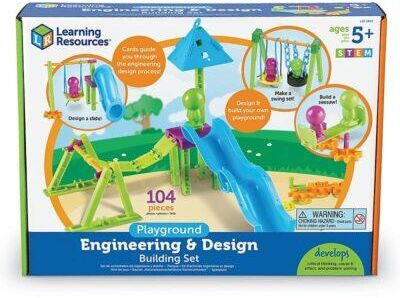
Learning Resources Playground Engineering & Design KitEncourage your child to come up with their own designs or they can follow the Challenge Cards, which include how to build different pieces of equipment on a playground (a twisty slide, a swing set, a seesaw, and more). Reproducible worksheets based...29,99 $*Shipping: 0,00 $Secure redirect to the provider
-
DEVERA Hanger and Full-length Mirror IntegrationSpecification Main Material: Rubber Wood,Solid Wood,Wood+Glass Product Style: American Design,Art Deco,Artsy,Contemporary,European Product Features Product Information: Full-length mirror, solid wood + rubber wood + glass, 65.7*17.7in (mirror width:…302,39 $*Shipping: 0,00 $Secure redirect to the provider



-
What is deductive and hypothetical thinking in pedagogy?
Deductive thinking in pedagogy involves starting with a general principle or theory and applying it to a specific situation to draw a conclusion. This approach helps students develop logical reasoning skills and understand the relationships between concepts. Hypothetical thinking, on the other hand, involves exploring different scenarios or possibilities to understand cause-and-effect relationships and make predictions. Both deductive and hypothetical thinking are important in pedagogy as they encourage critical thinking, problem-solving, and creativity in students. **
-
What is the meaning of deductive and inductive approaches?
Deductive reasoning is a logical process in which a conclusion is derived from a set of premises or assumptions. It involves moving from general principles to specific instances. On the other hand, inductive reasoning is a method of reasoning in which the premises are viewed as supplying strong evidence for the truth of the conclusion. It involves moving from specific observations to broader generalizations. Both deductive and inductive approaches are used in research and reasoning to draw conclusions and make predictions. **
-
What is the meaning of the deductive and inductive approach?
Deductive reasoning is a logical process in which a conclusion is derived from a set of premises or assumptions. It involves moving from general principles to specific instances. On the other hand, inductive reasoning is a method of reasoning in which the premises are viewed as supplying strong evidence for the truth of the conclusion, but do not guarantee it. Inductive reasoning involves moving from specific observations to broader generalizations. Both approaches are used in various fields such as science, mathematics, and philosophy to draw conclusions and make predictions based on available information. **
-
Can you give an example of the deductive learning method?
One example of the deductive learning method is a math class where the teacher presents a general rule or formula, such as the Pythagorean theorem, and then provides specific examples and exercises for students to apply the rule. The teacher starts with the general principle and then guides students through specific instances to demonstrate how the rule can be used. This approach allows students to understand the concept and then apply it to different problems. **


How do you solve the following question regarding deductive numerical reasoning?
To solve a question regarding deductive numerical reasoning, you need to carefully analyze the given information and look for patterns or relationships among the numbers. Start by identifying any consistent mathematical operations or sequences that can be applied to the numbers. Then, use these patterns to predict the next number in the sequence or to determine the missing number. It's important to approach the question systematically and consider all possible logical deductions before arriving at a conclusion. **
Could you please explain the difference between deductive and inductive reasoning to me?
Deductive reasoning starts with a general principle or premise and then applies it to a specific case to reach a logical conclusion. In contrast, inductive reasoning involves observing specific instances or examples and then drawing a general conclusion based on those observations. Deductive reasoning moves from the general to the specific, while inductive reasoning moves from the specific to the general. Both types of reasoning are important in critical thinking and problem-solving, and they are used in various fields such as science, mathematics, and philosophy. **
Top-Angebote
Products related to Deductive:
-
Usborne STEM Scribble Books Collection – 4 Book Set Science, Technology, Engineering & Maths Activity Books for KidsInspire curiosity and creative learning with the Usborne STEM Scribble Books Collection – 4 Book Set, from the trusted Usborne. This exciting educational collection includes: Science Scribble Book Technology Scribble Book Engineering Scribble Book Maths Scribble Book Packed with fun activities, puzzles, drawing challenges, and problem-solving exercises, these interactive scribble books introduce children to the exciting world of STEM (Science, Technology, Engineering, and Mathematics). Designed to make learning enjoyable, they encourage creativity, logical thinking, and hands-on exploration. Perfect for home learning, classroom activities, school holidays, and travel, this collection helps children build confidence while developing essential STEM skills. Why Parents & Teachers Love This Collection: Includes 4 engaging STEM activity books Encourages creativity, problem-solving, and critical thinking Covers Science, Technology, Engineering & Maths Interactive scribble activities make learning fun Ideal for children aged 6+, home learning, and classrooms A fantastic educational resource, the Usborne STEM Scribble Books Collection helps children discover, create, and learn through exciting hands-on activities.8,99 £*Shipping: 2,99 £Secure redirect to the provider
-
Sesderma Reti Age 5 Liposomal Serum Anti-Aging Innovation 30mLA facial serum for wrinkles and signs of ageing. Reduces wrinkles and fine lines. Hydrates and strengthens barrier. Restores youthful radiance. 5-Retinoid System: smooths wrinkles, accelerates renewal, and boosts collagen. Biomimetic Peptides: fill expression lines by stimulating collagen synthesis.54,51 £*Shipping: 5,34 £Secure redirect to the provider
-
AMX MU-3300 MUSE Automation Controller, 8 Serial (AMX-CCC033)The AMX MU-3300 MUSE Automation Controller is a powerful, secure, and reliable device that provides a dedicated computing resource running HARMAN Professional's AMX MUSE automation platform. The MU-3300 can simultaneously process a virtually unlimited number of scripts written in JavaScript, Python, or Groovy and natively supports Low-Code development with Node-RED. SpecificationsCountry of Origin: MexicoWeight: 8.3 lbs2418,49 £*Shipping: 0,00 £Secure redirect to the provider
-
Learning Resources Playground Engineering & Design KitEncourage your child to come up with their own designs or they can follow the Challenge Cards, which include how to build different pieces of equipment on a playground (a twisty slide, a swing set, a seesaw, and more). Reproducible worksheets based...29,99 $*Shipping: 0,00 $Secure redirect to the provider
-
What is the definition of hypothetical-deductive thinking and deductive thinking?
Hypothetical-deductive thinking is a problem-solving approach that involves creating a hypothesis or educated guess about a situation and then testing it through deductive reasoning. Deductive thinking, on the other hand, is a logical process where one starts with a general statement or hypothesis and then examines the possibilities to reach a specific, logical conclusion. In essence, hypothetical-deductive thinking combines the generation of hypotheses with deductive reasoning to arrive at a solution, while deductive thinking focuses solely on drawing specific conclusions from general principles. **
-
What is the definition of hypothetico-deductive thinking and deductive thinking?
Hypothetico-deductive thinking is a scientific method that involves formulating a hypothesis and then testing it through observation and experimentation to reach a conclusion. It is a process of making educated guesses and then systematically testing them to determine their validity. Deductive thinking, on the other hand, is a logical process where conclusions are drawn based on a set of premises or assumptions. It involves reasoning from general principles to specific instances to reach a logical conclusion. **
-
What is deductive and hypothetical thinking in pedagogy?
Deductive thinking in pedagogy involves starting with a general principle or theory and applying it to a specific situation to draw a conclusion. This approach helps students develop logical reasoning skills and understand the relationships between concepts. Hypothetical thinking, on the other hand, involves exploring different scenarios or possibilities to understand cause-and-effect relationships and make predictions. Both deductive and hypothetical thinking are important in pedagogy as they encourage critical thinking, problem-solving, and creativity in students. **
-
What is the meaning of deductive and inductive approaches?
Deductive reasoning is a logical process in which a conclusion is derived from a set of premises or assumptions. It involves moving from general principles to specific instances. On the other hand, inductive reasoning is a method of reasoning in which the premises are viewed as supplying strong evidence for the truth of the conclusion. It involves moving from specific observations to broader generalizations. Both deductive and inductive approaches are used in research and reasoning to draw conclusions and make predictions. **
Similar search terms for Deductive
-
DEVERA Hanger and Full-length Mirror IntegrationSpecification Main Material: Rubber Wood,Solid Wood,Wood+Glass Product Style: American Design,Art Deco,Artsy,Contemporary,European Product Features Product Information: Full-length mirror, solid wood + rubber wood + glass, 65.7*17.7in (mirror width:…302,39 $*Shipping: 0,00 $Secure redirect to the provider
-
Bosch Smart Home Universal Switch Flex White Matt Slim Automation SwitchDescription Control your smart home devices with ease using the Bosch Smart Home Universal Switch Flex in White Matt. Designed for convenient automation and flexible placement, this slim wireless switch allows you to control connected Bosch Smart Home devices with a simple press. Featuring a modern raised slim profile and screwless design, the Universal Switch Flex blends seamlessly into any home interior. With wireless communication technology and low power consumption, it provides a reliable and practical solution for smart home control without the need for complex wiring. Ideal for lighting control, automation routines, and smart home scenarios, the Bosch Smart Home Universal Switch Flex offers a simple way to make everyday tasks more convenient.40,99 £*Shipping: 0,00 £Secure redirect to the provider
-
Uplift Essentials Armband Heart Rate Monitor With Bluetooth 5.0 And ANT+ Connectivity Armband Heart Rate Monitor With Bluetooth 5.0 And ANT+ ConnectivityTrain smarter and safer with this armband heart rate monitor featuring accurate optical HR tracking, calorie burn monitoring, and heart rate zone feedback. Designed for fitness enthusiasts, cyclists, and athletes, this device connects seamlessly to...126,97 $*Shipping: 0,00 $Secure redirect to the provider
-
What is the meaning of the deductive and inductive approach?
Deductive reasoning is a logical process in which a conclusion is derived from a set of premises or assumptions. It involves moving from general principles to specific instances. On the other hand, inductive reasoning is a method of reasoning in which the premises are viewed as supplying strong evidence for the truth of the conclusion, but do not guarantee it. Inductive reasoning involves moving from specific observations to broader generalizations. Both approaches are used in various fields such as science, mathematics, and philosophy to draw conclusions and make predictions based on available information. **
-
Can you give an example of the deductive learning method?
One example of the deductive learning method is a math class where the teacher presents a general rule or formula, such as the Pythagorean theorem, and then provides specific examples and exercises for students to apply the rule. The teacher starts with the general principle and then guides students through specific instances to demonstrate how the rule can be used. This approach allows students to understand the concept and then apply it to different problems. **
-
How do you solve the following question regarding deductive numerical reasoning?
To solve a question regarding deductive numerical reasoning, you need to carefully analyze the given information and look for patterns or relationships among the numbers. Start by identifying any consistent mathematical operations or sequences that can be applied to the numbers. Then, use these patterns to predict the next number in the sequence or to determine the missing number. It's important to approach the question systematically and consider all possible logical deductions before arriving at a conclusion. **
-
Could you please explain the difference between deductive and inductive reasoning to me?
Deductive reasoning starts with a general principle or premise and then applies it to a specific case to reach a logical conclusion. In contrast, inductive reasoning involves observing specific instances or examples and then drawing a general conclusion based on those observations. Deductive reasoning moves from the general to the specific, while inductive reasoning moves from the specific to the general. Both types of reasoning are important in critical thinking and problem-solving, and they are used in various fields such as science, mathematics, and philosophy. **
* All prices are inclusive of VAT and, if applicable, plus shipping costs. The offer information is based on the details provided by the respective shop and is updated through automated processes. Real-time updates do not occur, so deviations can occur in individual cases. ** Note: Parts of this content were created by AI.